


Implementing digital transformation matters for modern business leaders because it helps organizations stay relevant, compete, and grow. Leaders who adopt digital tools and methods can speed up operations and reduce manual work. However, you won’t see those results without the right digital transformation framework.
| “A digital transformation framework gives leaders a clear plan to bring teams together, improve how work gets done, and make sure tech investments lead to real results.” – Michelle Nielsen, Client Success Manager at Protek |
Implementing digital transformation without a clear framework creates several risks for leaders and organizations. Teams may adopt tools without a shared purpose. This leads to projects that do not support business priorities. Additionally, it becomes too easy to focus on isolated fixes instead of long-term growth. That kind of short-sightedness can lead organizations to replace tools sooner than expected or to pay for overlapping solutions.
That’s why this article is here to help you avoid those pitfalls. We will discuss the value of a digital transformation framework in more detail, explain what you should include in yours, and discuss how you can weave it into your broader technology strategy.
Why Your Digital Transformation Framework Is a Business Transformation Framework
A detailed digital transformation framework helps your organization link technology work to real business goals. It sets clear priorities and goals so teams can decide what to do first and how to measure success. When leaders use a framework, they can spot weaknesses that cost time and money.
For example, a business with 100 employees could lose more than $250,000 in annual wages from daily IT downtime. However, these losses are preventable. A digital transformation framework reduces downtime by fixing the reasons it happens in the first place.
That’s because the right digital transformation methodology replaces disconnected systems, manual steps, and aging tools that fail during daily use. The framework defines how new platforms integrate, how data moves between systems, and how teams work when changes roll out.
Get Advice From an IT Consulting Team With 150+ Years of Combined Experience
What a Digital Transformation Framework That Drives Results Should Include
A Clear Strategic Vision
Implementing digital transformation simply for the sake of implementing it won’t get you anywhere. While 61% of business leaders say that digital transformation is their top priority, only 40% have successfully implemented it.
A lack of vision is part of why this disconnect exists. You need a clear roadmap to help you prioritize investments and decisions so that your efforts align with business goals rather than random technology adoption.
Measurable Key Performance Indicators
You should identify and track specific metrics that show whether transformation efforts are working. Tracking results through key performance indicators (KPIs) such as productivity, customer engagement, and financial return lets you know if your investments are delivering the outcomes you want, rather than just activity.
Pick about 5-10 KPIs tied directly to strategy, review them monthly, and adjust processes based on trends or gaps in progress toward goals.
Executive Leadership Involvement
Digital transformation requires support from senior leaders because their involvement drives alignment across teams and secures funding. Executives should act as sponsors who remove obstacles, allocate resources, and set expectations for progress, rather than leaving technical teams to operate independently.
However, getting them involved is often easier said than done. Only 23% of CEOs are directly involved in their organization’s digital transformation efforts. To help make this happen, assign a steering committee of at least three executives to review transformation progress every month with clear decisions about priorities and roadblocks.
| Explore More Ways You Can Enhance Your IT Processes |
Cross-Functional Collaboration
Alongside your executive team, you also should involve representatives from various departments, not just IT. When teams such as operations, marketing, and customer service work together, you reduce silos and create solutions that serve your whole organization.
Hold regular cross-department meetings, shared goals, and tools that let teams see each other’s progress and dependencies on a weekly cadence.
Change Management Processes
Your framework must address organizational change because people often resist new ways of working. If employees do not adopt changes or understand why they matter, your investments will deliver little sustained value.
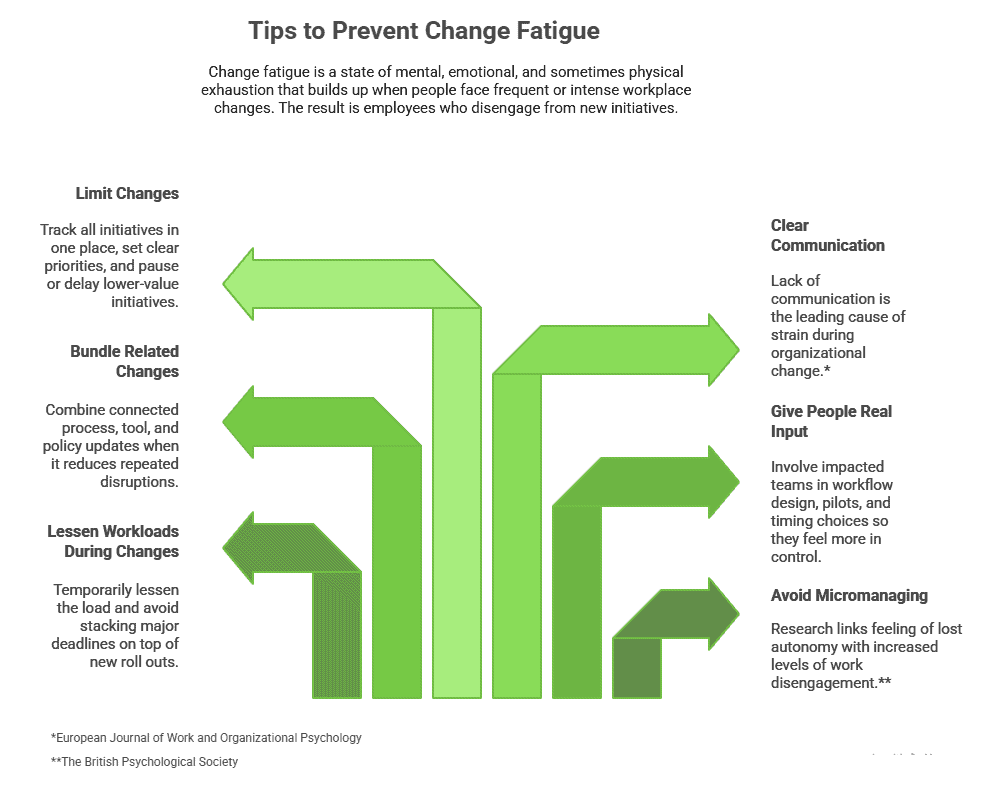
So, provide training and support structures, measure adoption rates, and celebrate milestones to shift behavior toward embracing new tools and processes. Without this focus, change fatigue can slow progress and harm morale.
A Feedback Loop
You need a built-in process to review results, act on insights, and refine your approach over time. Continuous measurement lets teams learn what works and what does not, so the transformation evolves with business needs instead of becoming outdated.
To implement this, hold quarterly reviews where leaders analyze data from dashboards, collect user feedback, and revise transformation plans based on evidence rather than assumptions.
Opportunities For Talent Development
Your framework must include a plan to develop the digital skills your workforce needs to succeed with new tools and processes. If employees lack skills, investments in technology will not yield full value.
Start by assessing skill gaps, offering targeted training programs, and tracking completion and competency improvements year-over-year to make sure employees can leverage new capabilities.
How to Weave Digital Transformation Into Your Broader Technology Strategy Framework
Align Transformation Initiatives
List the strategy areas you already manage, such as architecture, applications, data, cloud, service management, and vendors. Decide where each transformation initiative fits within those areas. Assign ownership so that transformation work follows the same accountability model as all other technology work.
Group Initiatives Into a Single Roadmap
Organize transformation initiatives using the same roadmap structure you already use, such as foundational, improvement, and growth work. Capture scope, affected systems, rough cost, and timeline in a simple intake format. Add these items to the same roadmap that leaders review each quarter.
The matrix below shows how to apply these shared decision rules in a consistent and repeatable way when evaluating and ranking initiatives.
| Evaluation Area | What to Consider | Scoring Guidance |
| Business Value | Revenue impact, cost reduction, customer experience, or operational improvement | 1 = low impact, 5 = high impact |
| Effort | Time, staffing, and complexity required to deliver | 1 = minimal effort, 5 = significant effort |
| Risk | Delivery risk, operational risk, or technology uncertainty | 1 = low risk, 5 = high risk |
| Dependencies | Reliance on other teams, systems, vendors, or approvals | 1 = few or none, 5 = many or critical |
| Priority Score | Combined score used to rank initiatives | Sum of all scores |
Use Shared Decision Rules
Apply one scoring method across all initiatives, not a special one for transformation. Rank work based on business value, effort, risk, and dependencies. Lock near-term priorities so teams can execute without constant changes.
Identify Dependencies
Map required platforms, integrations, data readiness, and operational changes early. Schedule prerequisite work first so transformation efforts do not stall. Treat dependency work as part of the strategy, not hidden tasks.
What Is a Digitization Framework & How Is It Connected to Your Digital Transformation Framework?
Digitization is not the same as digital transformation. It is only one part of the whole process. A digitization framework explains how an organization converts manual or paper-based work into digital form.
It focuses on data capture, process mapping, system selection, and basic automation. The goal is to make information easier to access, share, and manage so that daily work is simpler.
Digital transformation encompasses all of your work processes, not simply where your data is stored. These two frameworks represent different, but connected, processes.
| Let Utah’s Top IT Consultants Lead Your Digital Transformation | |||
| Salt Lake City | Sandy | West Jordan | South Jordan |
Enhance Your Technology Strategy Framework Based on Expert Advice
Protek helps organizations turn a digital transformation framework into clear action. We work with leadership teams to align technology decisions with business goals, reduce downtime, and replace disconnected tools with systems that work together.
Our focus stays on priorities, accountability, and measurable outcomes, so transformation supports long-term growth instead of short-term fixes. Reach out to us today to tell us about what you want to achieve!